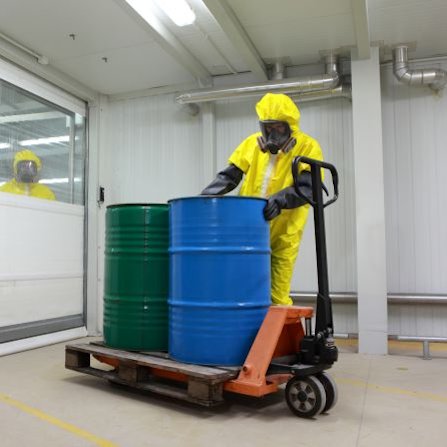
Hazard Communication - Certification Training

This training is designed to provide participants with both theoretical knowledge and practical skills in identifying, assessing, and managing chemical hazards. As part of the program, participants will learn about the classification of chemical substances, routes of exposure in the human body, safe handling practices, proper interpretation of labels and pictograms, and effective use of Safety Data Sheets (SDS).
The training is based on the Hazard Communication Standard (29 CFR 1910.1200) and incorporates HazCom best practices, helping participants ensure proper communication of chemical hazards and reduce risks in the workplace.
Program Components
- Chemical Hazard Communication Fundamentals (HazCom, HCS, GHS)
Overview of chemical safety standards - Identification and Classification of Hazardous Substances
Types of physical and health hazards - Forms of Chemical Substances and Their Characteristics
Solids, liquids, gases, vapors, and aerosols - Routes of Chemical Exposure in the Human Body
Inhalation, skin contact, ingestion, injection - Chemical Containers and Labeling Requirements
Labels, pictograms, and safety signs - Hierarchy of Controls
Methods for reducing hazards in the workplace - GHS Pictograms and Their Meanings
Visual identification of hazards - Hazard Communication Standard (HCS) Requirements
Employer and employee responsibilities - Safety Data Sheets (SDS)
Structure, content, and usage - Employee Training and Safe Work Practices
Knowledge transfer and risk prevention
Who is this course for?
✅ Production and technical personnel
✅ Laboratory staff
✅ Warehouse and logistics workers
✅ Cleaning and sanitation personnel
✅ Maintenance staff
✅ Supervisors and managers
✅ New employees working with or around chemical substances
✅ Anyone who needs basic knowledge of chemical safety
⏱ Duration: 6 hours (1 working day)
📍 Format: Certification training – Theory
📜 Certificate: Issued upon successful completion of the exam