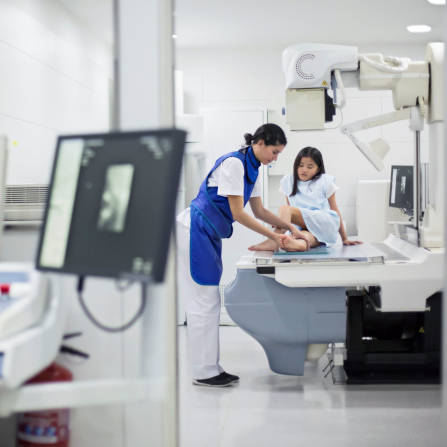
Healthcare - Radiation Safety

Ionizing and non-ionizing radiation are essential components of modern healthcare and are widely used in diagnostic imaging, interventional procedures, radiation therapy, and nuclear medicine. While these technologies provide significant clinical benefits, uncontrolled radiation exposure may pose serious health risks to both healthcare workers and patients. Therefore, understanding radiation safety principles, exposure control measures, and safe work practices is essential for maintaining a safe healthcare environment.
This training provides participants with a comprehensive understanding of ionizing and non-ionizing radiation, radiation hazards, exposure assessment and control methods, radiation protection principles, monitoring techniques, and emergency response procedures. The program helps reduce occupational radiation exposure, protect employee health, and ensure compliance with internationally recognized radiation safety standards.
Program Components
1. Radiation and Health Hazards
- Understanding ionizing and non-ionizing radiation;
- Types of ionizing radiation and their applications;
- Medical uses of radiation in healthcare;
- Short-term and long-term health effects of radiation exposure.
2. Radiation Protection and Exposure Control
- Fundamental principles of radiation protection;
- Methods for controlling and minimizing radiation exposure;
- Reducing exposure to X-ray radiation;
- Difference between radioactive contamination and radiation exposure.
3. Monitoring and Safe Work Practices
- Radiation detection and monitoring equipment;
- Importance of personal dosimetry;
- Safe work practices in radiation environments;
- Emergency response procedures for radiation incidents.
4. Responsibilities and Regulatory Requirements
- Employer and employee responsibilities;
- Key elements of a radiation safety program;
- Employee training and awareness requirements;
- Overview of international radiation safety standards and best practices.
Who Should Attend?
✅ Radiologists and radiologic technologists;
✅ Physicians and nurses;
✅ Interventional radiology and cardiac catheterization laboratory personnel;
✅ Radiation therapy department staff;
✅ Nuclear medicine professionals;
✅ Occupational safety specialists and healthcare facility managers;
✅ Anyone who may be exposed to ionizing radiation during their work.
⏱️ Duration: 5–7 hours
📍 Format: Certification Training – Theory and Practical Sessions
📜 Certificate: Issued upon successful completion of the final assessment.