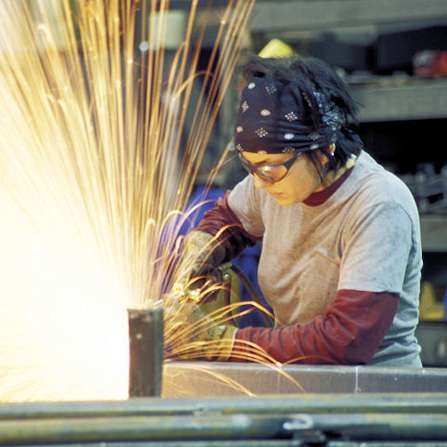
Welding, Cutting, and Brazing Safety

The “Welding, Cutting, and Brazing Safety” training introduces participants to the fundamental hazards associated with welding, cutting, brazing, and soldering operations, as well as methods for controlling and preventing these hazards.
The course covers different types of welding processes, associated thermal and chemical hazards, safe work practices, Hot Work safety, ventilation requirements, and the proper selection and use of personal protective equipment.
The training also addresses the requirements of a Hazard Communication Program and the key elements and responsibilities of a Safe Welding Program (SWP), supporting the safe organization and management of welding and related operations.
Program Components
1. Welding, Cutting, Brazing and Soldering Processes and Hazards
- Fundamental welding, brazing, cutting, and soldering processes;
- Different types of welding and hazards associated with each process;
- Thermal hazards generated during welding, cutting, and brazing;
- Chemical hazards;
- Fire and explosion risks;
- Other work-related hazards;
- Hazard identification and selection of appropriate control measures.
2. Safe Work Practices and Hot Work Safety
- Safety control measures and best practices;
- Hot Work and requirements for performing hot work safely;
- Safe use of welding, cutting, brazing, and soldering equipment;
- Inspection of applicable equipment and safe work practices;
- Work area preparation and control of fire and explosion risks during hot work;
- Safety requirements associated with welding and related operations.
3. Ventilation, Air Quality and Personal Protective Equipment
- Ventilation safety requirements;
- Control of air quality and hazardous substances during welding and related operations;
- Personal Protective Equipment (PPE) and requirements for its use;
- Protection of the eyes, face, hands, and body;
- Respiratory protection;
- Hazards associated with chemicals used during welding, cutting, brazing, and soldering;
- Proper selection, use, and maintenance of protective equipment.
4. Hazard Communication Program and Safe Welding Program
- Requirements of the Hazard Communication Program;
- Communication of hazards associated with chemicals used during welding, cutting, brazing, and soldering;
- Key elements of the Safe Welding Program (SWP);
- Responsibilities of the parties involved in the SWP;
- Organization and management of safe welding operations;
- Monitoring and control of compliance with safety requirements.
Who Is This Training For?
✅ Welders;
✅ Brazing and cutting operators;
✅ Personnel performing soldering operations;
✅ Technical and production personnel;
✅ Maintenance and repair personnel;
✅ Occupational safety professionals;
✅ Supervisors and managers;
✅ Personnel responsible for organizing and supervising hot work;
✅ Anyone who performs or supervises welding, cutting, brazing, or soldering operations in the workplace.
⏱️ Duration: 5–7 hours
📍 Format: Certificate Training – Theoretical and Practical Part
📜 Certificate: Issued upon successful completion of the final assessment (examination).