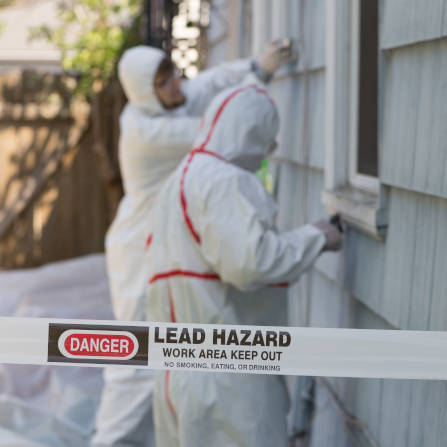
Lead Safety in General Industry

The training “Protection from Lead Exposure in General Industry” is designed to increase participants’ awareness of the risks associated with occupational lead exposure in the workplace, potential health hazards, and preventive measures.
Throughout the training, participants will learn about the primary sources of lead and the ways it can spread in the workplace, routes of lead entry into the body, mechanisms of exposure, and the health hazards associated with acute and chronic lead exposure.
Particular attention is given to the hierarchy of controls for lead exposure, engineering and administrative controls, the proper selection and use of respirators, respirator fit testing, and the responsibilities of employers and employees within a respiratory protection program.
Program Components
1. Sources of Lead and Occupational Exposure Risks
- Primary sources of lead and pathways of lead dispersion in the workplace;
- Employees at risk of lead exposure;
- Primary routes of lead entry into the body;
- Mechanisms of lead exposure;
- Signs and symptoms of lead exposure;
- Identification of occupational lead exposure risks in the workplace.
2. Health Hazards Associated with Lead Exposure
- Health hazards associated with acute lead exposure;
- Effects of chronic lead exposure;
- Potential effects of lead exposure on human health;
- Importance of timely recognition of signs and symptoms of lead exposure;
- Key principles for reducing lead exposure risks.
3. Risk Control and Protective Measures
- Hierarchy of controls for lead exposure risks;
- Engineering control measures;
- Administrative control measures;
- Management of workplace processes and environmental safety;
- Use of Personal Protective Equipment (PPE);
- Types of respirators and requirements for their use to protect against lead exposure;
- Respirator fit testing;
- Inspection, maintenance, and safe use of respirators.
4. Respiratory Protection Program and Responsibilities
- Key principles of a respiratory protection program;
- Employer responsibilities under the respiratory protection program;
- Employee responsibilities under the respiratory protection program;
- Importance of proper respirator selection and use;
- Practical requirements for the safe use of respirators;
- Proper maintenance and ensuring the serviceability of respiratory protection equipment.
Who Is This Training For?
The training is designed for employees whose work activities involve potential occupational exposure to lead or lead-containing materials.
This includes:
✅ Production and technical personnel;
✅ Occupational health and safety specialists;
✅ Supervisors and managers;
✅ Employees who participate in lead-related work or work in areas adjacent to such activities.
⏱️ Duration: 5–7 hours
📍 Format: Certificate Training – theoretical and practical components
📜 Certificate: Issued upon successful completion of the final assessment (exam).