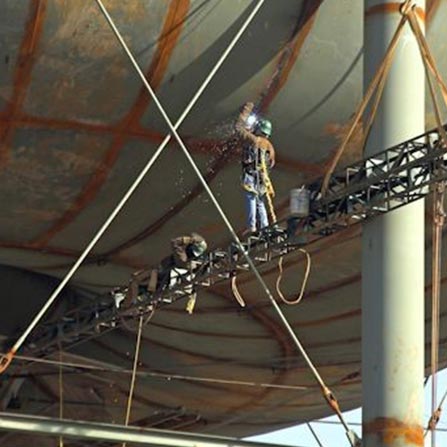
Fall Protection in Construction

Falls from height are among the leading causes of workplace accidents and fatalities in the construction sector. Such incidents frequently result in severe injuries, loss of life, and violations of occupational health and safety requirements.
The training covers theoretical and practical aspects of identifying hazards associated with working at heights, assessing risks, and preventing falls. Participants will become familiar with fall protection systems, personal and collective protective measures, the proper use, inspection, and maintenance of safety equipment, as well as the fundamental principles of conducting rescue operations in the event of an incident involving work at height.
The training content is based on the fall protection requirements and relevant best practices established by the United States Occupational Safety and Health Administration (OSHA).
Program Components
1. Fall Hazards, Risk Assessment, and Prevention
- Types and common causes of fall-related workplace accidents;
- Identification of hazards associated with working at heights;
- Hazard analysis, risk assessment, and risk control methods;
- Hierarchy of controls for fall prevention;
- Key components and responsibilities of a fall protection program;
- Roles and responsibilities of competent and qualified persons.
2. Personal and Collective Fall Protection Systems
- Personal fall protection systems and their components;
- Fall arrest and fall restraint systems;
- Proper selection and use of personal protective equipment;
- Collective protection systems: working platforms, guardrails, and safety nets;
- Warning lines, protective barriers, and safety monitoring systems;
- Protection of floor openings and measures against falling objects;
- Safe scaffold work practices, including hazards associated with supported and suspended scaffolds.
3. Safety Training, Equipment Inspection, and Employer Responsibilities
- Employer responsibilities within a fall protection program;
- Fundamental principles and requirements of safety training;
- KSA Model (Knowledge, Skills, and Abilities);
- Principles of practical training and competency assessment;
- Trainer qualifications and the importance of hands-on training;
- Inspection requirements for fall protection equipment;
- Equipment condition monitoring, maintenance, and safe use.
4. Rescue Operations and Emergency Response at Heights
- Fundamental principles of responding to incidents involving work at height;
- Rescue procedures and requirements for conducting rescue operations;
- Key aspects of rescue planning and organization;
- Implementation of appropriate safety measures during an incident;
- Fundamental principles of safe victim rescue and evacuation.
Who Should Attend?
This training is designed for construction sector employees and other personnel whose work activities involve risks associated with falls from height.
Including:
✅ Construction workers and technical personnel;
✅ Employees performing work at height;
✅ Construction site supervisors and managers;
✅ Occupational health and safety specialists and managers;
✅ Site engineers, work supervisors, and forepersons;
✅ Personnel involved in scaffold erection and operation;
✅ Anyone whose job responsibilities involve risks associated with falls from height.
⏱️ Duration: 5–7 hours
📍 Format: Certificate Training – Theoretical and Practical Sessions
📜 Certificate: Issued upon successful completion of the final assessment (examination).