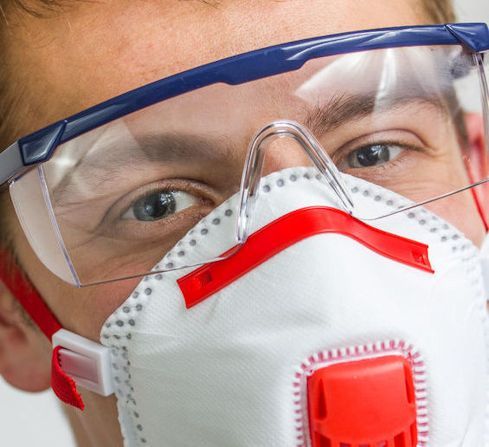
Respiratory Protection
The training “Respiratory Protection Program” introduces participants to the fundamental principles of protecting employees from airborne hazards in the workplace, the proper selection and use of respiratory protective equipment, and the requirements for effectively managing a Respiratory Protection Program.
Workplace exposure to air contaminants, dust, fumes, mists, gases, vapors, aerosols, and oxygen-deficient atmospheres may result in serious health effects, including respiratory diseases, impaired lung function, and other occupational health problems.
The training covers methods for assessing and controlling respiratory hazards, the main types of respiratory protective equipment, key components of a Respiratory Protection Program (RPP), medical evaluation and respirator fit testing requirements, as well as respirator inspection and user training requirements.
Program Components
1. Respiratory Hazards and Exposure Assessment
- Types of respiratory hazards and risks associated with workplace exposure;
- Airborne dust, fumes, mists, aerosols, gases, and vapors;
- Oxygen-deficient atmospheres and associated hazards;
- Methods for assessing employee exposure to respiratory hazards;
- Potential health effects associated with respiratory hazard exposure.
2. Respiratory Hazard Control and Protective Equipment
- Methods for controlling respiratory hazards;
- Main types of masks and respirators;
- Air-purifying respirators;
- Atmosphere-supplying respirators;
- Fundamental principles for selecting and using respirators.
3. Respiratory Protection Program (RPP)
- Key components of a Respiratory Protection Program (RPP);
- Medical evaluation requirements related to respirator use;
- Respirator fit testing requirements;
- Respirator inspection requirements;
- Training and education requirements for respirator users.
4. Safe Respirator Use and Program Management
- Fundamental principles of respirator use, maintenance, and safe operation;
- Inspection and condition checks of respirators;
- Practical approaches to the proper use of respirators;
- Importance of user information, education, and training;
- Fundamental principles for effective management and monitoring of a Respiratory Protection Program.
Who Is This Training For?
✅ Occupational safety professionals;
✅ Professionals working in occupational safety and health;
✅ Company managers and senior management personnel;
✅ Persons responsible for developing and managing Respiratory Protection Programs;
✅ Employees whose work environment involves respiratory hazards;
✅ Production and technical personnel;
✅ Persons responsible for the selection, inspection, and use of respirators;
✅ Representatives of organizations where work processes involve exposure to airborne hazardous substances or oxygen-deficient atmospheres.
⏱️ Duration: 5–7 hours
📍 Format: Certificate Training – Theoretical and Practical Components
📜 Certificate: Issued upon successful completion of the final assessment (exam).