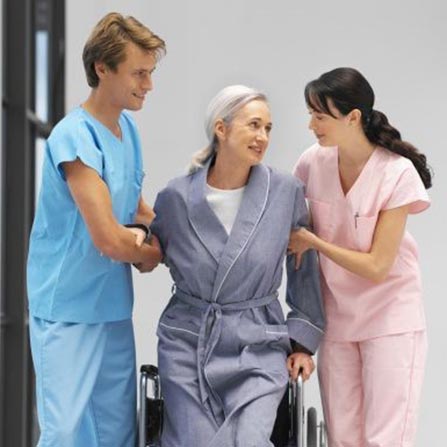
Patient Handling Safety and Occupational Hazards in Healthcare Settings
The training course "Patient Handling Safety and Occupational Hazards in Healthcare Settings" is a specialized educational program designed to help healthcare professionals identify, assess, and reduce occupational risks associated with patient handling and care.
The course provides an in-depth examination of the hazards associated with lifting, transferring, and repositioning patients, as well as the potential physical injuries resulting from these activities and effective methods for their prevention. Particular attention is given to occupational and workplace risk factors that increase the likelihood of injuries among healthcare workers, including those employed in nursing homes.
The training also addresses other occupational hazards commonly encountered in healthcare settings, including radiation exposure and latex allergies. Participants will explore the importance of employee education, safety training, and hands-on instruction in promoting workplace safety and reducing occupational risks.
Program Components
1. Occupational Risks and Injuries Associated with Patient Handling
- Occupational hazards associated with lifting and transferring patients;
- Healthcare professionals most susceptible to injuries when performing patient handling tasks;
- Musculoskeletal injuries resulting from manual patient handling;
- Physical strain and contributing factors associated with patient care activities;
- The importance of preventing occupational injuries in healthcare settings.
2. Risk Factors in Healthcare and Nursing Home Settings
- Major occupational risk factors experienced by healthcare workers;
- Specific hazards encountered in nursing homes and long-term care facilities;
- Risks associated with patients' physical conditions and limited mobility;
- The impact of workplace conditions, available space, equipment, and work organization on employee safety;
- Identification and assessment of workplace risks.
3. Hazardous Patient Handling Tasks and Risk Control Measures
- Hazardous tasks associated with lifting, transferring, and repositioning patients;
- Risks resulting from improper body positioning and movement during patient handling;
- Safe patient handling techniques and the appropriate use of assistive equipment;
- Practical measures to reduce physical strain and injury risks;
- Identification of hazardous tasks and selection of safer alternative handling methods.
4. Additional Healthcare Workplace Hazards and Employee Training
- Occupational hazards associated with radiation exposure;
- Latex allergies and related workplace risks;
- The importance of employee education, awareness, and practical training;
- Key requirements for instruction and hands-on training related to safe patient handling;
- Assessment of employees' knowledge and practical skills;
- Promoting workplace safety culture and preventing occupational risks.
Who Should Attend This Training?
This training is intended for healthcare professionals whose responsibilities involve patient care, lifting, transferring, or working with occupational hazards in healthcare facilities.
Including:
✅ Physicians and nurses;
✅ Patient care providers and healthcare support staff;
✅ Nursing assistants and caregivers;
✅ Employees of nursing homes and long-term care facilities;
✅ Rehabilitation and physical therapy professionals;
✅ Emergency medical and ambulance personnel;
✅ Administrative and supervisory healthcare staff;
✅ Occupational health and safety professionals;
✅ Healthcare facility managers and supervisors.
⏱️ Duration: 5–7 hours
📍 Format: Certificate training – theoretical and practical sessions
📜 Certificate: A certificate is awarded upon successful completion of the final assessment (examination).
Minimum Assessment Requirement: Participants must achieve a minimum score of 70% on the final course assessment.