Preventing MSDs in Healthcare
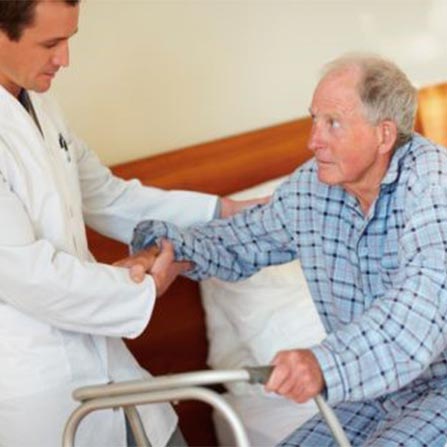
Implementing preventive measures focused on safe patient lifting and handling in healthcare facilities significantly reduces the risk of work-related injuries, the occurrence of musculoskeletal disorders, and associated financial costs.
This training is designed for healthcare professionals and includes practical recommendations for employees, as well as essential approaches for employers and management to help reduce the frequency and severity of work-related musculoskeletal disorders (MSDs) in the workplace.
Throughout the course, participants will explore proven and effective approaches used in healthcare settings, safe patient lifting and transfer techniques, methods for assessing and reducing ergonomic risks, and practical solutions for preventing work-related injuries.
Program Components
1. Management's Role and Responsibilities in Ensuring Workplace Safety
- Management's role and responsibilities in controlling risks associated with hazardous work activities;
- The importance of establishing a safe working environment and implementing preventive measures;
- Employer and management involvement in preventing musculoskeletal disorders;
- Organization of work processes and support for employee safety.
2. Ergonomic Risk Assessment and Prevention
- Major ergonomic risk factors in healthcare facilities;
- Identification and assessment of ergonomic risks in the workplace;
- Factors contributing to work-related musculoskeletal disorders (MSDs);
- Strategies and preventive measures for reducing ergonomic risks;
- Improving working conditions and minimizing the risk of injuries.
3. Safe Patient Lifting, Handling, and Positioning
- Effective techniques for safe patient lifting and transferring;
- Hazards associated with manual patient handling and methods of prevention;
- Principles of proper patient positioning;
- Safe patient handling techniques and practical approaches;
- Prevention of work-related musculoskeletal injuries during patient care activities.
4. Practical Solutions and Final Course Assessment
- Ergonomic hazards associated with other workplace activities;
- Practical solutions for minimizing musculoskeletal injuries and other ergonomic disorders;
- Implementation of safe working practices in daily activities;
- Review of key training topics and reinforcement of practical knowledge;
- Final course assessment.
ho Should Attend This Training?
This training is intended for healthcare professionals whose responsibilities involve patient care, lifting, transferring, or positioning, as well as individuals responsible for workplace safety and occupational risk management.
Including:
✅ Physicians and nurses;
✅ Patient care providers;
✅ Administrative and management personnel of healthcare facilities;
✅ Nursing assistants and healthcare support staff;
✅ Occupational health and safety professionals;
✅ Other healthcare employees whose duties involve patient lifting, handling, or positioning.
⏱️ Duration: 5–7 hours
📍 Format: Certificate training – theoretical and practical sessions
📜 Certificate: A certificate is awarded upon successful completion of the final assessment (examination).