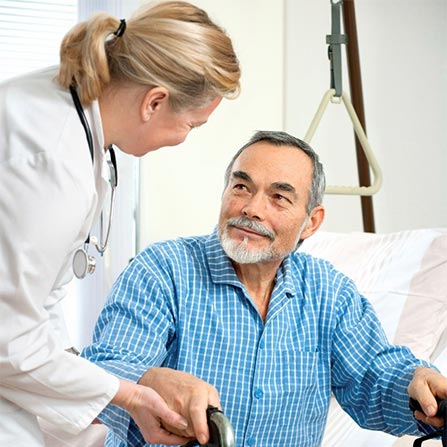
Safe Patient Handling Program

Hospitals and other healthcare facilities experience high rates of occupational injuries and health-related problems. In 2011, nearly 50% of reported occupational injuries and illnesses among nursing and nursing assistant personnel were associated with musculoskeletal disorders (MSDs).
To address one of the major causes of workplace injuries, it is essential to develop and implement a comprehensive Safe Patient Handling Program. Such a program incorporates safe patient lifting, positioning, movement, and transfer practices.
This training will help participants assess, develop, implement, and improve a Safe Patient Handling Program. Particular attention will be given to identifying ergonomic risks associated with work activities, understanding management's roles and responsibilities, and establishing mechanisms for evaluating and monitoring program effectiveness. The overall objective is to protect both healthcare workers and patients while preventing work-related injuries.
Program Components
1. Assessment of Safe Patient Handling Needs and Identification of Ergonomic Risks
- The process of assessing safe patient handling needs and its key stages;
- Analysis of work activities involving patient lifting, positioning, movement, and transfers;
- Identification and assessment of ergonomic risks associated with workplace activities;
- Identification of key factors contributing to musculoskeletal disorders (MSDs);
- Assessment of existing hazards and determination of necessary preventive measures.
2. Management's Role and Responsibilities in Ensuring Workplace Safety
- Management's role and responsibilities in establishing a safe working environment;
- The importance of management support and commitment in controlling risks associated with hazardous work activities;
- Allocation of organizational responsibilities and employee involvement;
- Promoting the implementation of safe work practices;
- Providing the necessary resources and organizational support.
3. Development and Implementation of a Safe Patient Handling Program
- Key stages in developing a Safe Patient Handling Program;
- Defining program objectives, priorities, and essential components;
- Incorporating safe lifting, positioning, movement, and transfer techniques into the program;
- Implementation and effective execution of the Safe Patient Handling Program;
- Employee awareness, training, and active participation in the program.
4. Program Evaluation, Monitoring, and Continuous Improvement
- Methods for evaluating the effectiveness of a Safe Patient Handling Program;
- Monitoring program implementation and analyzing its results;
- Assessment of work-related injuries and musculoskeletal disorder indicators;
- Identification of program gaps and opportunities for improvement;
- Approaches to continuous program improvement and maintaining effectiveness;
- Final course assessment.
Who Should Attend This Training?
This training is intended for healthcare professionals, particularly those involved in patient care, lifting, movement, and transfer activities, as well as individuals responsible for healthcare facility management and workplace safety.
Including:
✅ Physicians and nurses;
✅ Patient care providers;
✅ Hospital and healthcare facility directors and managers;
✅ Administrative and healthcare support staff;
✅ Occupational health and safety professionals;
✅ Other employees involved in patient care, lifting, movement, and transfer activities.
⏱️ Duration: 5–7 hours
📍 Format: Certificate training – theoretical and practical sessions
📜 Certificate: A certificate is awarded upon successful completion of the final assessment (examination).